
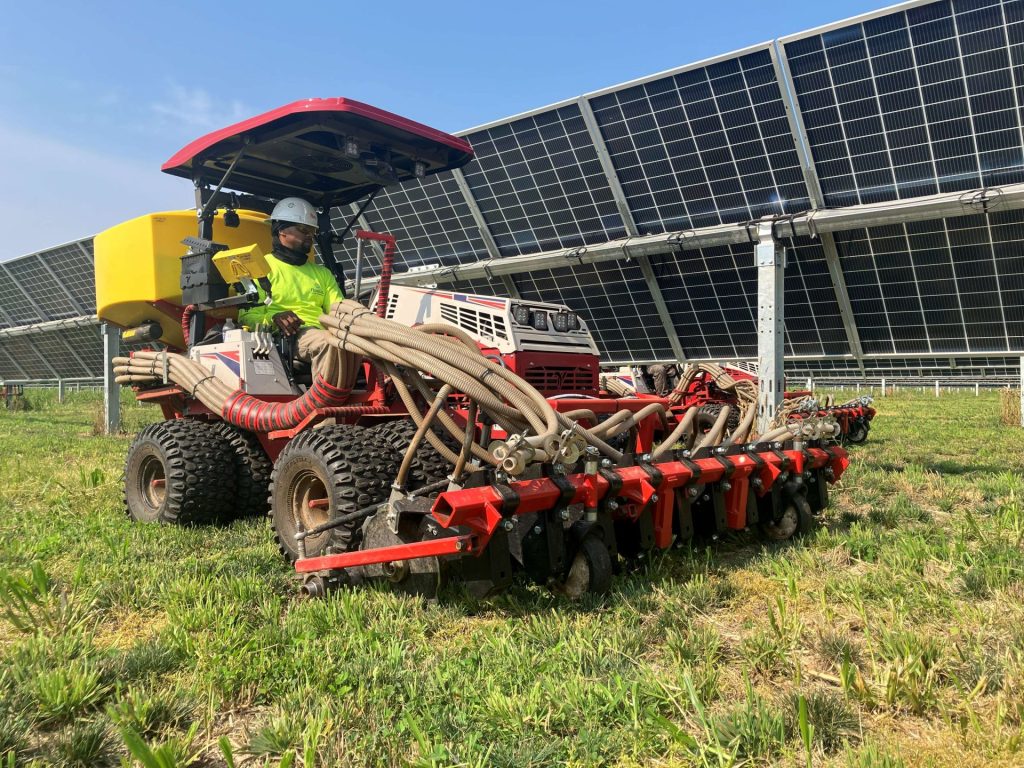
Selecting the right seeding method is one of the most important decisions in any native grass establishment project. While choosing the appropriate seed mix is essential, how that seed is planted can have a significant impact on germination, stand uniformity, and long-term success.
Two of the most common methods for establishing native grasses are drill seeding and broadcast seeding. Each has its advantages, limitations, and ideal applications. Understanding the differences can help landowners and conservation professionals choose the best approach for their specific project.
What Is Drill Seeding?
Drill seeding uses specialized equipment to place seed directly into the soil at a controlled depth and spacing. Native seed drills are designed to handle the wide variety of seed sizes commonly found in native grass and wildflower mixes while promoting excellent seed-to-soil contact.
This method is often preferred when site conditions allow equipment access and uniform establishment is a priority.
Benefits of Drill Seeding
Drill seeding offers several advantages that can improve establishment success.
- Consistent planting depth for improved germination
- Excellent seed-to-soil contact that supports moisture absorption
- More uniform seed distribution across the planting area
- Reduced seed waste compared to surface applications
- Improved establishment rates under favorable conditions
Because seed placement is carefully controlled, drill seeding often produces more consistent results, particularly on prepared sites.
What Is Broadcast Seeding?
Broadcast seeding involves spreading seed across the soil surface using mechanical spreaders or other application equipment. After seeding, the site is often lightly packed or rolled to improve seed-to-soil contact.
This method is especially useful on sites where traditional drilling equipment cannot easily operate.
Flexible Application
Broadcast seeding works well on irregularly shaped fields, rocky terrain, steep slopes, and areas with limited equipment access.
Large Area Coverage
For some projects, broadcast seeding allows crews to cover large areas efficiently while minimizing ground disturbance.
Compatibility with Diverse Seed Mixes
Broadcast equipment can easily distribute complex native seed blends that include grasses, forbs, and other species.
Considerations for Each Method
Neither method is universally better. The right choice depends on the conditions and goals of the project.
Drill Seeding Considerations
- Requires properly prepared ground
- May be difficult on rocky or uneven terrain
- Specialized equipment is needed
- Equipment access must be available
Broadcast Seeding Considerations
- Greater dependence on weather and moisture
- Seed may be more vulnerable to wind or wildlife before establishment
- Seed-to-soil contact may be less consistent without proper finishing techniques
- Higher seeding rates may be recommended in some situations
Evaluating these factors helps determine which method is likely to deliver the best results.
When Each Method Works Best
Choosing between drill seeding and broadcast seeding often comes down to site conditions.
Drill seeding is typically the preferred option for:
- Agricultural fields
- Conservation plantings on prepared ground
- Large areas with accessible terrain
- Projects where precise seed placement is important
Broadcast seeding may be a better choice for:
- Steep slopes
- Rocky or uneven landscapes
- Habitat restoration projects with limited equipment access
- Areas where minimizing soil disturbance is a priority
Each method has an important place in native vegetation establishment, and experienced planners often select the approach that best matches the site’s unique challenges.
Pairing the Right Seed with the Right Planting Method
Even the best planting equipment cannot overcome poor seed quality or an unsuitable seed mix. Successful establishment depends on matching high-quality native seed with the appropriate planting method and proper site preparation.
Taking time to evaluate soil conditions, terrain, project objectives, and seasonal timing helps improve the likelihood of a healthy, long-lasting stand.
Building Strong Native Plant Communities
Both drill seeding and broadcast seeding can produce successful native grass stands when used under the right conditions. Understanding the strengths of each method allows landowners and conservation professionals to make informed decisions that support better establishment and long-term success.
At FDCE, we help landowners, developers, and conservation partners determine the most effective seeding approach for each site’s unique conditions. From site preparation and seed selection to planting and ongoing vegetation management, our team develops customized solutions that support healthy, resilient landscapes for years to come.