
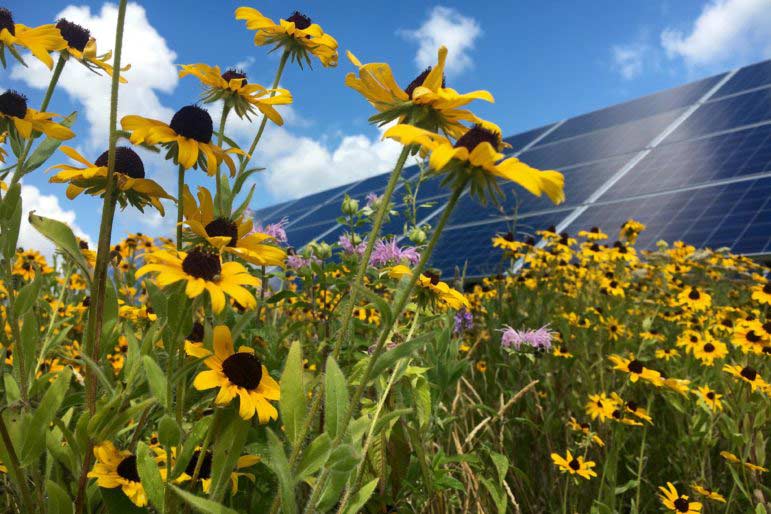
As solar energy development continues to expand, project owners are increasingly looking for ways to maximize the value of their sites beyond energy production alone. One of the most effective approaches is establishing pollinator-friendly vegetation beneath and around solar arrays. By incorporating native grasses and forbs into vegetation management plans, solar farms can support local ecosystems while maintaining site functionality.
Pollinator-friendly solar sites demonstrate that renewable energy and environmental stewardship can work together, creating benefits for project owners, communities, and wildlife alike.
Why Pollinators Matter
Pollinators play a vital role in healthy ecosystems and agricultural productivity. Bees, butterflies, moths, and other pollinating insects help support the reproduction of countless plant species while contributing to crop production in surrounding landscapes.
As natural habitats continue to decline, utility-scale solar sites offer a unique opportunity to create and restore valuable pollinator habitat across large areas of land.
Benefits of supporting pollinators include:
- Increased biodiversity
- Improved ecosystem resilience
- Enhanced habitat connectivity
- Support for nearby agricultural operations
- Improved public perception of solar developments
When designed thoughtfully, solar farms can become productive habitats rather than simply managed green space.
The Role of Native Forbs
Providing Nectar and Pollen Sources
Native forbs, or flowering broadleaf plants, are the foundation of pollinator-friendly seed mixes. Different species bloom throughout the growing season, ensuring pollinators have access to food sources from spring through fall.
Supporting Diverse Pollinator Species
A variety of flowering plants attracts a wider range of pollinators. While some species may favor certain flowers, diverse plant communities help support bees, butterflies, beetles, and other beneficial insects.
Improving Habitat Quality
In addition to food resources, many native forbs provide shelter, nesting opportunities, and breeding habitat that contribute to healthier pollinator populations.
Why Native Grasses Are Equally Important
While flowering plants often receive the most attention, native grasses play an essential role in creating stable and sustainable solar-site ecosystems.
Native grasses help:
- Stabilize soil and reduce erosion
- Improve stormwater infiltration
- Suppress invasive weeds
- Provide structure and habitat for wildlife
- Support long-term vegetation health
Together, native grasses and forbs create balanced plant communities capable of thriving with less intervention than traditional turf or non-native vegetation.
Designing a Pollinator-Friendly Solar Site
Successful pollinator habitat begins with proper planning. Every site presents unique challenges related to soil conditions, climate, project goals, and maintenance requirements.
Species Selection
Choosing native species adapted to local conditions improves establishment success and long-term performance. Seed mixes should include a variety of flowering species with staggered bloom periods.
Site Preparation
Proper site preparation helps reduce weed pressure and improves seed-to-soil contact. A strong foundation significantly increases the likelihood of successful establishment.
Maintenance Planning
Pollinator-friendly vegetation still requires management, particularly during the establishment phase. Strategic mowing and targeted weed control help desirable species become established while minimizing competition.
Long-Term Benefits for Solar Projects
Beyond ecological advantages, pollinator-friendly vegetation can provide meaningful operational benefits.
Well-established native vegetation often requires fewer inputs over time compared to traditional vegetation management approaches. Deep-rooted native plants can improve soil health, reduce erosion concerns, and help manage stormwater across the site.
Project owners may also benefit from:
- Reduced long-term maintenance requirements
- Improved site aesthetics
- Enhanced sustainability credentials
- Positive community engagement opportunities
- Support for environmental and corporate responsibility goals
As the renewable energy industry evolves, these additional benefits are becoming increasingly important considerations during project planning.
Building Solar Sites That Benefit More Than Energy Production
Pollinator-friendly solar farms represent an opportunity to create lasting environmental value while supporting renewable energy generation. Through the thoughtful use of native forbs and grasses, solar sites can provide critical habitat for pollinators, improve biodiversity, and contribute to healthier ecosystems.
FDCE helps solar developers design, establish, and manage vegetation systems that balance operational requirements with ecological goals. By integrating pollinator-friendly practices into vegetation planning, solar projects can deliver benefits that extend far beyond the panels themselves.