
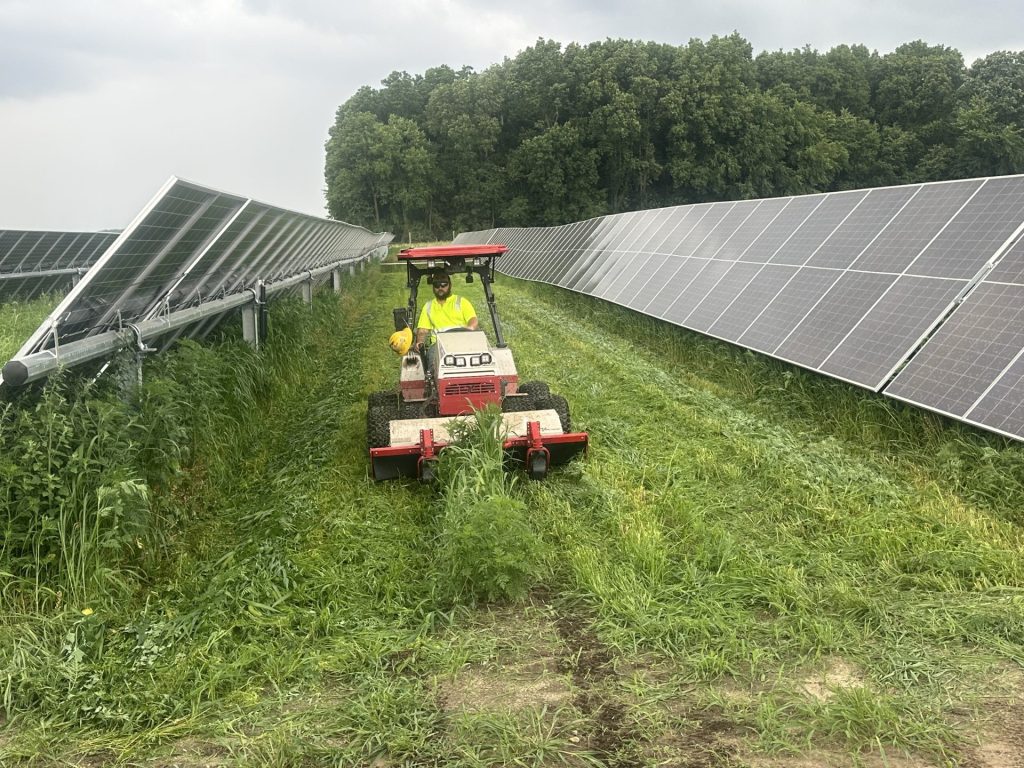
Vegetation management is a critical component of maintaining solar site performance. Left unmanaged, vegetation can interfere with equipment, reduce efficiency, and create long-term maintenance challenges. The key is not just controlling growth, but using the right method at the right time.
Mowing, discing, and herbicide applications each play a distinct role in solar-site vegetation management. Understanding when and why these tools are used helps ensure a balanced approach that supports both operational needs and long-term site health.
Mowing: Maintaining Control Above Ground
Mowing is one of the most common and visible vegetation management practices on solar sites. It is primarily used to control plant height and maintain accessibility without disturbing the soil.
Mowing is most effective when vegetation is already established and needs routine management. It helps keep growth from shading panels, blocking access roads, or interfering with equipment.
Key uses for mowing include:
- Maintaining appropriate vegetation height throughout the growing season
- Supporting visibility for inspections and maintenance
- Controlling annual weeds before they go to seed
- Promoting healthy growth of desirable species when timed correctly
When used strategically, mowing encourages thicker, more uniform stands while preventing unwanted overgrowth.
Discing: Resetting the Site When Needed
Discing is a more aggressive method that involves mechanically disturbing the soil to break up existing vegetation. It is typically used during site preparation or when a vegetation stand needs to be reestablished.
Unlike mowing, discing targets both above-ground growth and root systems, making it useful for resetting areas that have become overrun with undesirable species.
Discing is commonly used in situations such as:
- Preparing a site prior to seeding or reseeding
- Managing heavily compacted soils
- Controlling persistent or invasive vegetation
- Incorporating organic matter or soil amendments
Because discing disturbs the soil, it must be used carefully on solar sites to avoid erosion risks and protect infrastructure.
Herbicides: Targeted and Efficient Control
Herbicides provide a precise and efficient way to manage vegetation, particularly when selective control is needed. They are often used alongside mowing and discing as part of an integrated vegetation management plan.
Selective vs. Non-Selective Applications
Selective herbicides target specific plant types, allowing desirable vegetation to remain intact. Non-selective herbicides are used when complete vegetation removal is required, such as during initial site preparation.
Timing and Application
The effectiveness of herbicides depends heavily on timing. Applications are typically aligned with plant growth stages to maximize impact while minimizing unnecessary use.
Common applications include:
- Controlling invasive or noxious weeds
- Supporting establishment of native vegetation by reducing competition
- Maintaining clear zones around critical infrastructure
- Managing regrowth following mechanical treatments
When applied correctly, herbicides enhance overall vegetation control while reducing the need for repeated mechanical intervention.
Choosing the Right Method for the Right Stage
Each vegetation management tool serves a specific purpose, and the most effective approach often combines multiple methods. The stage of the project plays a major role in determining which technique is most appropriate.
Site Preparation Phase
Discing and herbicides are often used together to clear existing vegetation and prepare the site for seeding.
Establishment Phase
Targeted herbicide use and limited mowing help reduce competition while allowing desirable species to take hold.
Long-Term Maintenance Phase
Routine mowing, combined with selective herbicide applications, maintains vegetation height and controls invasive species without disrupting the established stand.
Understanding how these methods work together allows for more efficient management and better long-term outcomes.
Supporting Long-Term Solar Site Performance
Effective vegetation management is not about relying on a single method. It is about using the right combination of tools to meet the needs of the site over time.
Mowing, discing, and herbicides each contribute to a comprehensive strategy that supports accessibility, efficiency, and environmental goals. With proper planning and execution, solar sites can maintain stable, well-managed vegetation that enhances both performance and sustainability.
FDCE works with developers and landowners to implement vegetation management plans tailored to each site, ensuring the right techniques are used at every stage for lasting results.